
Protein Molecular Weight Markers

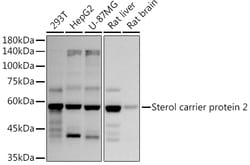
ABCLONAL SCIENCE INC Sterol carrier protein 2 Rabbit mAb

This gene encodes two proteins sterol carrier protein X (SCPx) and sterol carrier protein 2 (SCP2), as a result of transcription initiation from 2 independently regulated promoters. The transcript initiated from the proximal promoter encodes the longer SCPx protein, and the transcript initiated from the distal promoter encodes the shorter SCP2 protein, with the 2 proteins sharing a common C-terminus. Evidence suggests that the SCPx protein is a peroxisome-associated thiolase that is involved in the oxidation of branched chain fatty acids, while the SCP2 protein is thought to be an intracellular lipid transfer protein. This gene is highly expressed in organs involved in lipid metabolism, and may play a role in Zellweger syndrome, in which cells are deficient in peroxisomes and have impaired bile acid synthesis. Alternative splicing of this gene produces multiple transcript variants, some encoding different isoforms.

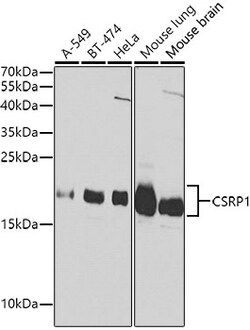
ABclonal Technology CSRP1 Rabbit pAb
This gene encodes a member of the cysteine-rich protein (CSRP) family. This gene family includes a group of LIM domain proteins, which may be involved in regulatory processes important for development and cellular differentiation. The LIM/double zinc-finger motif found in this gene product occurs in proteins with critical functions in gene regulation, cell growth, and somatic differentiation. Alternatively spliced transcript variants have been described.
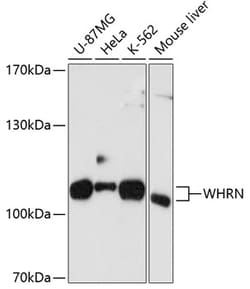
ABclonal Technology WHRN Rabbit pAb
This gene is thought to function in the organization and stabilization of sterocilia elongation and actin cystoskeletal assembly, based on studies of the related mouse gene. Mutations in this gene have been associated with autosomal recessive non-syndromic deafness and Usher Syndrome. Alternative splicing results in multiple transcript variants.
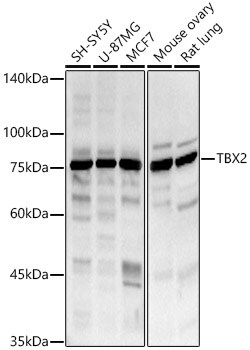
ABclonal Technology TBX2 Rabbit pAb
This gene is a member of a phylogenetically conserved family of genes that share a common DNA-binding domain, the T-box. T-box genes encode transcription factors involved in the regulation of developmental processes. This gene product is the human homolog of mouse Tbx2, and shares strong sequence similarity with Drosophila omb protein. Expression studies indicate that this gene may have a potential role in tumorigenesis as an immortalizing agent. Transcript heterogeneity due to alternative polyadenylation has been noted for this gene.
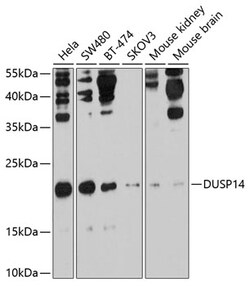
ABclonal Technology DUSP14 Rabbit pAb
Dual-specificity phosphatases (DUSPs) constitute a large heterogeneous subgroup of the type I cysteine-based protein-tyrosine phosphatase superfamily. DUSPs are characterized by their ability to dephosphorylate both tyrosine and serine/threonine residues. They have been implicated as major modulators of critical signaling pathways. DUSP14 contains the consensus DUSP C-terminal catalytic domain but lacks the N-terminal CH2 domain found in the MKP (mitogen-activated protein kinase phosphatase) class of DUSPs (see MIM 600714) (summary by Patterson et al., 2009 [PubMed 19228121]).
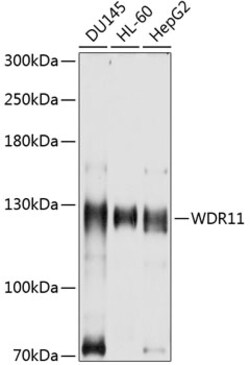
ABclonal Technology WDR11 Rabbit pAb
This gene encodes a member of the WD repeat protein family. WD repeats are minimally conserved regions of approximately 40 amino acids typically bracketed by gly-his and trp-asp (GH-WD), which may facilitate formation of heterotrimeric or multiprotein complexes. Members of this family are involved in a variety of cellular processes, including cell cycle progression, signal transduction, apoptosis, and gene regulation. This gene is located in the chromosome 10q25-26 region, which is frequently deleted in gliomas and tumors of other tissues, and is disrupted by the t(10,19) translocation rearrangement in glioblastoma cells. The gene location suggests that it is a candidate gene for the tumor suppressor locus.
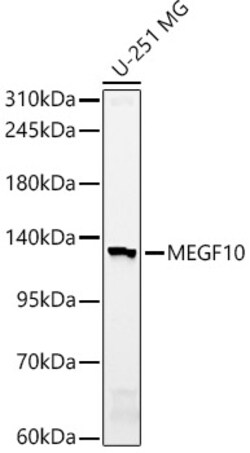
ABclonal Technology MEGF10 Rabbit pAb
This gene encodes a member of the multiple epidermal growth factor-like domains protein family. The encoded protein plays a role in cell adhesion, motility and proliferation, and is a critical mediator of apoptotic cell phagocytosis as well as amyloid-beta peptide uptake in the brain. Expression of this gene may be associated with schizophrenia, and mutations in this gene are a cause of early-onset myopathy, areflexia, respiratory distress, and dysphagia (EMARDD) as well as congenital myopathy with minicores. Alternatively spliced transcript variants have been observed for this gene.
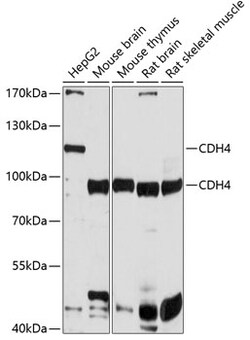
ABclonal Technology CDH4 Rabbit pAb
This gene is a classical cadherin from the cadherin superfamily. The encoded protein is a calcium-dependent cell-cell adhesion glycoprotein comprised of five extracellular cadherin repeats, a transmembrane region and a highly conserved cytoplasmic tail. Based on studies in chicken and mouse, this cadherin is thought to play an important role during brain segmentation and neuronal outgrowth. In addition, a role in kidney and muscle development is indicated. Of particular interest are studies showing stable cis-heterodimers of cadherins 2 and 4 in cotransfected cell lines. Previously thought to interact in an exclusively homophilic manner, this is the first evidence of cadherin heterodimerization. Three transcript variants encoding different isoforms have been found for this gene.
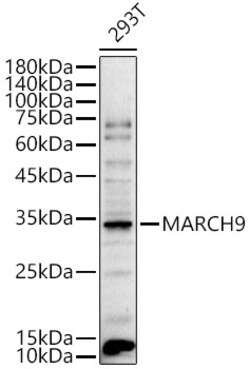
ABclonal Technology MARCH9 Rabbit pAb
MARCH9 is a member of the MARCH family of membrane-bound E3 ubiquitin ligases (EC 6.3.2.19). MARCH enzymes add ubiquitin (see MIM 191339) to target lysines in substrate proteins, thereby signaling their vesicular transport between membrane compartments. MARCH9 induces internalization of several membrane glycoproteins and directs them to the endosomal compartment (Bartee et al., 2004 [PubMed 14722266], Hoer et al., 2007 [PubMed 17174307]).
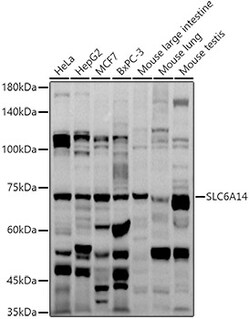
ABclonal Technology SLC6A14 Rabbit pAb
This gene encodes a member of the solute carrier family 6. Members of this family are sodium and chloride dependent neurotransmitter transporters. The encoded protein transports both neutral and cationic amino acids. This protein may also function as a beta-alanine carrier. Mutations in this gene may be associated with X-linked obesity. A pseudogene of this gene is found on chromosome X.
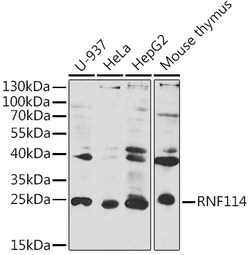
ABclonal Technology RNF114 Rabbit pAb
Predicted to enable ubiquitin protein ligase activity. Predicted to be involved in protein polyubiquitination and ubiquitin-dependent protein catabolic process. Located in cytosol and plasma membrane. Biomarker of male infertility.
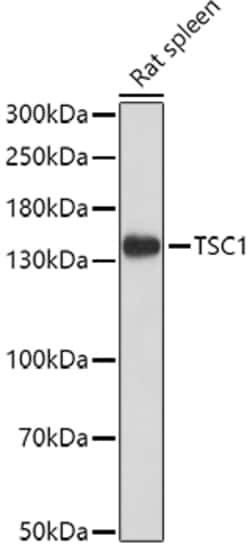
ABclonal Technology TSC1 Rabbit pAb
This gene is a tumor suppressor gene that encodes the growth inhibitory protein hamartin. The encoded protein interacts with and stabilizes the GTPase activating protein tuberin. This hamartin-tuberin complex negatively regulates mammalian target of rapamycin complex 1 (mTORC1) signaling which is a major regulator of anabolic cell growth. This protein also functions as a co-chaperone for Hsp90 that inhibits its ATPase activity. This protein functions as a facilitator of Hsp90-mediated folding of kinase and non-kinase clients, including TSC2 and thereby preventing their ubiquitination and proteasomal degradation. Mutations in this gene have been associated with tuberous sclerosis and lymphangioleiomyomatosis.
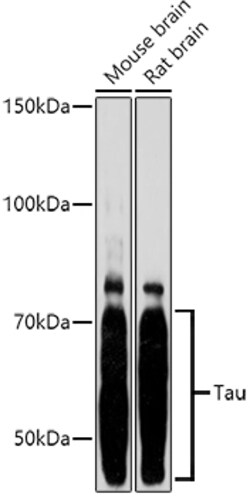
ABclonal Technology Tau Rabbit pAb
This gene encodes the microtubule-associated protein tau (MAPT) whose transcript undergoes complex, regulated alternative splicing, giving rise to several mRNA species. MAPT transcripts are differentially expressed in the nervous system, depending on stage of neuronal maturation and neuron type. MAPT gene mutations have been associated with several neurodegenerative disorders such as Alzheimers disease, Picks disease, frontotemporal dementia, cortico-basal degeneration and progressive supranuclear palsy.
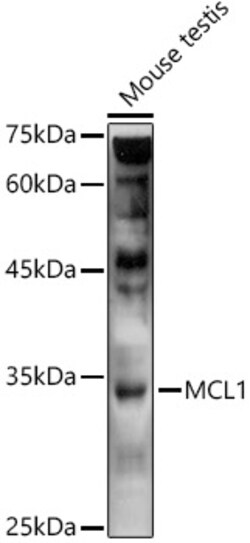
ABclonal Technology MCL1 Rabbit pAb
This gene encodes an anti-apoptotic protein, which is a member of the Bcl-2 family. Alternative splicing results in multiple transcript variants. The longest gene product (isoform 1) enhances cell survival by inhibiting apoptosis while the alternatively spliced shorter gene products (isoform 2 and isoform 3) promote apoptosis and are death-inducing.
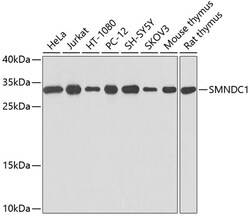
ABclonal Technology SMNDC1 Rabbit pAb
This gene is a paralog of SMN1 gene, which encodes the survival motor neuron protein, mutations in which are cause of autosomal recessive proximal spinal muscular atrophy. The protein encoded by this gene is a nuclear protein that has been identified as a constituent of the spliceosome complex. This gene is differentially expressed, with abundant levels in skeletal muscle, and may share similar cellular function as the SMN1 gene.